Pathways to Freedom: Tracing Savannah's African American Historic Landmarks and Underground Railroad Legacy
Savannah is a city of stories layered so thickly upon one another that any single narrative thread, pulled carefully, leads to a dozen others. The city's official identity has long centered on its architectural grandeur, its celebrated squares, and its reputation for genteel hospitality. But beneath that surface—sometimes literally, in the case of underground passages and hidden rooms—runs a more demanding history: the story of enslaved people who risked everything to reach freedom, and of the institutions and individuals who helped make that possible.
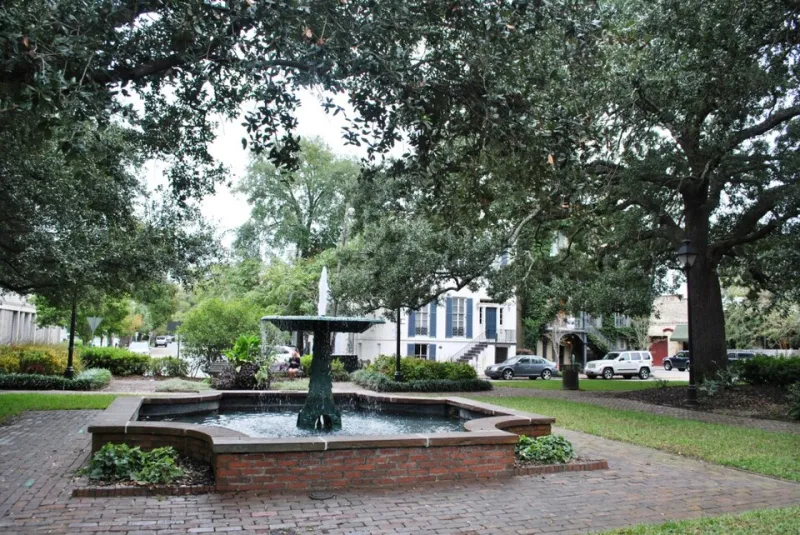
To walk Savannah's streets with this history in mind is to experience the city differently. The same oak-shaded squares that appear in travel brochures also served as sites of slave auctions. The churches that anchor neighborhood life were, in many cases, founded by free Black Savannahians who understood that institutional self-determination was itself a form of resistance. The river that makes the city's waterfront so picturesque was also the border across which freedom lay, tantalizingly close and perilously difficult to reach.
This guide is an invitation to engage with that history directly—not as a corrective to Savannah's beauty, but as an enrichment of it.
The First African Baptist Church: A Foundation of Resistance
Founded in 1773, First African Baptist Church holds the distinction of being the oldest continuously operating African American church in the United States. That fact alone would make it significant. But the church's role in the Underground Railroad elevates its historical importance to a national level.
The church's basement floor contains a series of holes drilled in a diamond pattern—a configuration that matches symbols used in the Bakongo cosmological tradition, which was practiced by many enslaved West and Central Africans. These holes, historians believe, provided ventilation for the space below the floorboards where freedom seekers were concealed before being moved northward along the network of safe houses and sympathetic conductors that constituted the Underground Railroad.
Visitors to First African Baptist Church today encounter a living congregation as well as a historic site. Guided tours are available and are led by church members who approach the material with both scholarly rigor and personal investment. The experience of standing in a space where people once huddled in darkness, waiting for the signal to move, is not easily forgotten.
The Beach Institute: Preserving a Community's Own Record
Established in 1867 by the American Missionary Association, the Beach Institute was among the first schools built in Georgia specifically to educate formerly enslaved people following the Civil War. The building that stands today on East Harris Street has been restored and now operates as a cultural center focused on African American history and art.
The institute's collection of folk art by the late Ulysses Davis—a Savannah barber who spent decades carving wooden portraits of every American president, alongside figures from African American history and mythology—is among the most unusual and affecting holdings of any museum in the region. Davis's work, created in the back room of his barbershop over the course of a lifetime, represents a form of private historical reckoning that resonates powerfully in the context of the Beach Institute's broader mission.
For visitors seeking to understand how Savannah's Black community documented and transmitted its own history outside of official channels, the Beach Institute is an essential stop.
Laurel Grove South Cemetery: The Geography of Segregated Memory
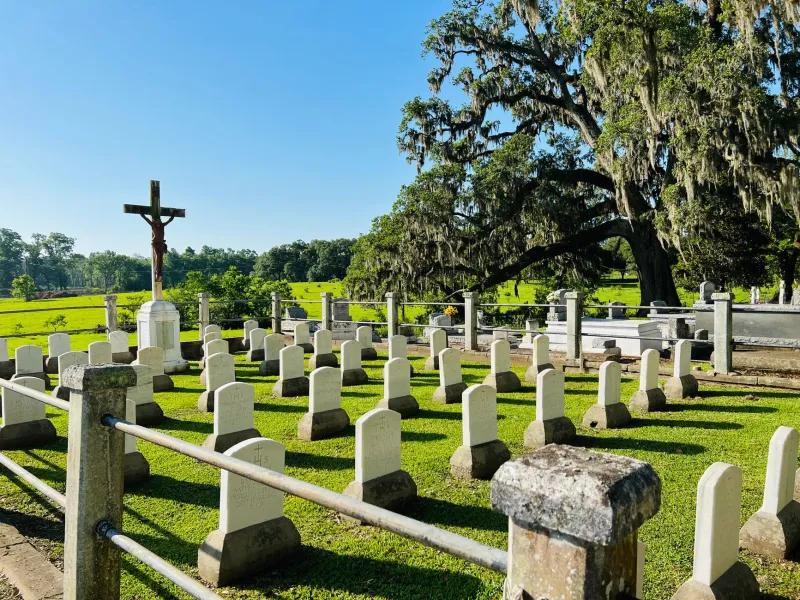
Savannah's Laurel Grove Cemetery is divided into two sections: the northern portion, which served the white community, and the southern portion, Laurel Grove South, which was established for the city's Black residents. The southern section contains the graves of many of Savannah's most significant African American historical figures, including Andrew Bryan, who founded First African Baptist Church, and Anthony Odingsells, a formerly enslaved man who became one of the wealthiest African Americans in antebellum Georgia.
The contrast between the resources historically devoted to the two sections of the cemetery is itself a form of historical documentation. Laurel Grove South has been the subject of ongoing preservation and restoration efforts by community organizations and the City of Savannah, and visiting the site today means witnessing both the evidence of historical neglect and the ongoing work of reclamation.
The Gullah-Geechee Corridor: A Living Connection
Savannah sits within the federally designated Gullah-Geechee Cultural Heritage Corridor, which extends along the Atlantic coast from North Carolina through northern Florida. The Gullah-Geechee people are the descendants of West and Central Africans who were enslaved on the Sea Island plantations of the coastal South, and their culture—language, foodways, spiritual practices, and artistic traditions—represents one of the most intact survivals of African heritage in the Western Hemisphere.
Understanding Savannah's Underground Railroad history requires understanding the Gullah-Geechee context. Many of the freedom seekers who passed through Savannah were from Sea Island communities, and the networks that sheltered them often operated along lines of kinship and cultural solidarity that transcended geography. The Gullah-Geechee Cultural Heritage Corridor Commission maintains resources for visitors seeking to engage with this living culture, and several organizations in the Savannah area offer culturally guided tours that center Gullah-Geechee perspectives.
Ralph Mark Gilbert Civil Rights Museum
Named for the pastor who organized Savannah's NAACP chapter in the 1940s and led the city's first sustained civil rights campaigns, the Ralph Mark Gilbert Civil Rights Museum occupies a historic building on Martin Luther King Jr. Boulevard. The museum documents the long arc of African American civic life in Savannah, from Reconstruction through the civil rights movement of the twentieth century.
The exhibits here make clear that the story of Black freedom in Savannah did not end with emancipation—that the Underground Railroad was one chapter in a much longer struggle for full citizenship and human dignity that continued through sit-ins, boycotts, and legal challenges well into living memory. For visitors who have spent time at the earlier sites on this itinerary, the museum provides essential connective tissue.
Approaching These Sites with Intention
Historic sites associated with slavery and the Underground Railroad require a particular quality of attention from visitors. These are not simply scenic or intellectually interesting locations; they are places where human beings endured extraordinary suffering and demonstrated extraordinary courage. Approaching them with that awareness—moving slowly, reading interpretive materials carefully, and resisting the impulse to reduce complex histories to simplified narratives—is both a matter of respect and a prerequisite for genuine understanding.
Savannah's African American historic landmarks are not peripheral to the city's identity. They are foundational to it. The Savannah that visitors admire today—its architectural beauty, its civic culture, its celebrated spirit of hospitality—was built in significant part by people who were denied the most basic freedoms. Acknowledging that truth does not diminish the city's appeal. It deepens it, and it honors the full complexity of the place that Savannah has always been.