The Architecture of Rescue: How Savannah Taught America to Save Its Past
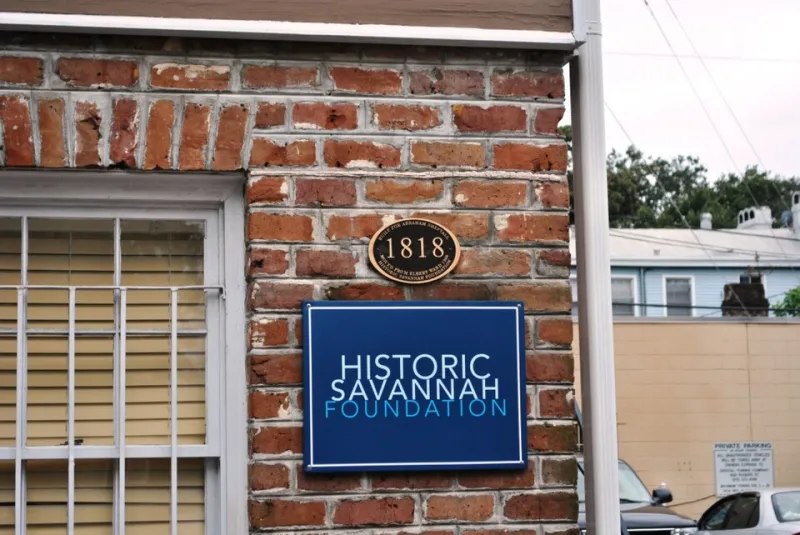
Photo: Elisa.rolle, CC BY-SA 4.0, via Wikimedia Commons
There is a building on Savannah's Factor's Walk — a narrow, cobblestoned corridor above the riverfront — that would not exist today were it not for a decision made by seven women at a kitchen table in 1955. The same could be said of hundreds of structures throughout the Historic District: the Federal-style townhouses on Jones Street, the cast-iron-fronted commercial buildings on Broughton, the antebellum churches whose spires still punctuate the city's skyline. All of them, at some point in the postwar decades, faced the realistic possibility of demolition.
That they survived is not accidental. It is the result of one of the most consequential civic mobilizations in American urban history — a grassroots preservation effort that began with limited resources and enormous conviction, and that eventually produced a 2.5-square-mile National Historic Landmark District recognized as the largest of its kind in the United States.
The Crisis That Catalyzed a Movement
To understand what the Historic Savannah Foundation (HSF) accomplished, it is necessary to understand the circumstances that made its founding urgent. By the early 1950s, Savannah was experiencing the economic contraction that afflicted many American port cities in the postwar era. The cotton trade that had made the city prosperous through the nineteenth century had long since diminished. Industry was consolidating or departing. Middle-class residents were following the national pattern of suburban migration, leaving the historic core increasingly to lower-income populations and commercial vacancy.
The physical consequence was accelerating deterioration. Antebellum mansions were subdivided into rooming houses or simply abandoned. Civic buildings fell into disrepair. And when the city's urban renewal apparatus — enthusiastically funded by federal programs of the era — proposed addressing blight through clearance rather than rehabilitation, the trajectory of the Historic District seemed likely to follow that of countless other American neighborhoods: erasure in the name of progress.
The demolition of the Isaiah Davenport House in 1955 was the flashpoint. When the structure — a Federal-period masterwork completed in 1820 — was slated for destruction to make way for a mortuary expansion, a group of concerned Savannah citizens organized to purchase and preserve it. Their success in doing so led directly to the formation of the Historic Savannah Foundation, with the Davenport House as its first project and its enduring symbol.
The Revolving Fund: A Preservation Innovation
What distinguished HSF's approach from sentiment or simple opposition to change was its introduction of a practical financial mechanism: the revolving fund. Rather than simply advocating for preservation or relying on government intervention, the Foundation used donated capital to purchase threatened historic properties, stabilize them, and then resell them to private buyers under deed restrictions requiring sympathetic restoration. The proceeds from each sale were returned to the fund and used to acquire the next endangered structure.
This model was, at the time, genuinely innovative. It transformed preservation from a reactive campaign into a proactive real estate strategy, demonstrating that historic structures could be financially viable investments rather than burdensome relics. It also shifted the burden of stewardship from the public sector to a network of private owners who had, by purchasing under restriction, committed themselves to maintaining the architectural integrity of their properties.
The revolving fund model has since been adopted by preservation organizations across the country, and HSF is widely credited with pioneering its application at meaningful scale.
What Made Savannah's Approach Transferable
Preservation advocates in other cities sometimes observe that Savannah benefited from unique circumstances — a relatively compact historic core, an architectural heritage of unusual quality, and a civic culture with deep roots in place-based identity. These advantages are real, and any honest assessment of the Savannah model must acknowledge them.
But the transferable lessons are equally real. The first is the importance of acting before the crisis becomes irreversible. The Davenport House was saved by days, not months. Preservation movements that wait for consensus or government leadership frequently arrive too late. The second lesson is the power of demonstrating economic value. HSF's revolving fund succeeded not because it appealed to sentiment but because it made a credible financial case — one that eventually attracted private investors, developers, and residents who might otherwise have dismissed preservation as impractical idealism.
The third lesson, perhaps the most broadly applicable, is the necessity of legal and regulatory infrastructure. Savannah's preservation success was consolidated by the establishment of its Historic District ordinance and the creation of the Metropolitan Planning Commission's architectural review process, which gave the city enforceable tools to protect what private efforts had rescued. Without that regulatory framework, individual preservation victories would have remained vulnerable to future development pressure.
The Ongoing Tension Between Preservation and Vitality
It would be misleading to present Savannah's preservation story as a resolved narrative. The same success that made the Historic District a desirable address has also generated pressures that test the movement's founding principles. Rising property values have displaced long-term residents, including many members of the African American community whose presence in the city predates the preservation era by generations. Short-term rental proliferation has altered the residential character of streets that preservation advocates spent decades stabilizing. Commercial development continues to press against the district's edges.
These tensions are not unique to Savannah — they appear in every American city that has successfully revitalized a historic core — and they do not diminish the significance of what was accomplished. They do, however, complicate the narrative of preservation as an unambiguous civic good. The question of who benefits from a preserved city, and who is priced out of it, is one that Savannah's preservation community continues to grapple with in earnest.
A Living Laboratory for Urban Stewardship
What Savannah offers other American cities is not a template to be copied but a case study to be studied — one that demonstrates both the transformative potential of committed preservation advocacy and the complex social consequences that follow from success. The Historic Savannah Foundation's archives, accessible to researchers and available in part through the Georgia Historical Society, document the full arc of this effort with a candor that makes them genuinely useful to planners, historians, and civic leaders working in other contexts.
The buildings themselves, of course, remain the most eloquent argument. Walk along Jones Street on a quiet morning, or stand in the shadow of the Owens-Thomas House on Oglethorpe Square, or look out from Factor's Walk toward the river, and the stakes of what was preserved become immediately legible. These are not museum pieces. They are a functioning city — one that chose, at a critical moment, to remember itself.