Where the Living and the Lost Converge: Bonaventure Cemetery's Enduring Pull on the American Soul
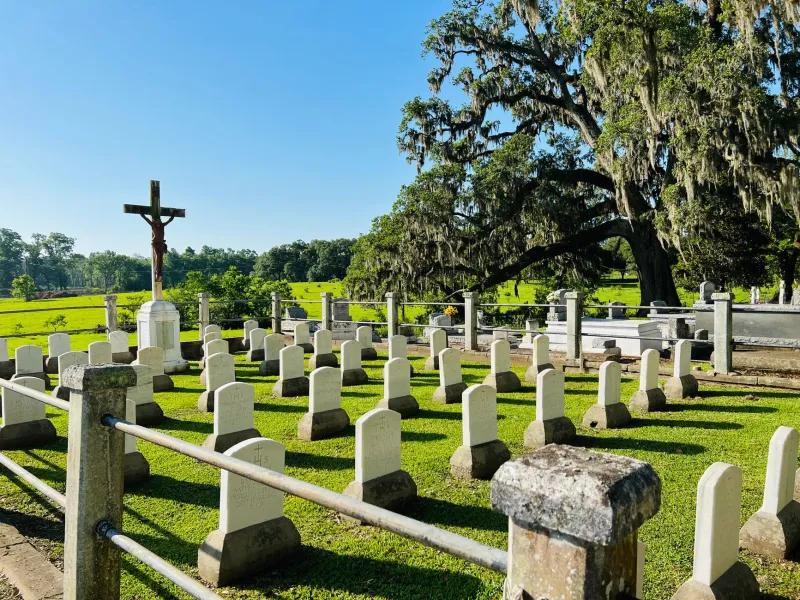
There is a particular quality to the light at Bonaventure Cemetery in the late afternoon—filtered through cathedral arches of live oak, softened by curtains of Spanish moss, and cast across monuments that have stood since the antebellum era. Visitors who arrive expecting gothic spectacle often leave having experienced something quieter and more difficult to name. That tension between expectation and encounter is precisely what makes Bonaventure one of the most compelling destinations in the American South.
Located on a bluff above the Wilmington River, roughly five miles east of Savannah's Historic District, Bonaventure occupies 160 acres of land that was once a colonial plantation. Its conversion into a cemetery began in the mid-nineteenth century, and by the time the City of Savannah acquired it in 1907, it had already accumulated the density of stories that would eventually make it famous far beyond Georgia's borders.
The Book That Changed Everything
For many first-time visitors, the journey to Bonaventure begins with a paperback. John Berendt's 1994 true-crime narrative Midnight in the Garden of Good and Evil introduced a global readership to Savannah's eccentric social fabric, and the cemetery served as one of the book's most evocative settings. The image of the Bird Girl statue—originally photographed by Jack Leigh for the book's iconic cover—became synonymous with Savannah itself, even though the original sculpture was relocated to the Telfair Museums' Jepson Center to protect it from the volume of visitors it attracted.
The novel's success was staggering. It spent an unprecedented 216 weeks on the New York Times bestseller list, and the subsequent 1997 film adaptation directed by Clint Eastwood amplified Bonaventure's international profile further still. Cemetery staff have noted that visitors continue to arrive clutching worn copies of the book, seeking the exact angles and atmospheres Leigh captured in his photographs.
Yet reducing Bonaventure to a literary backdrop would be a significant misreading of what the site actually represents. The cemetery predates the book by well over a century, and its significance is rooted in histories that have nothing to do with murder trials or Southern eccentricity.
A Landscape of Grief and Artistry
Bonaventure functions, in many respects, as an open-air museum of funerary art. The cemetery contains works by some of the most accomplished sculptors of the nineteenth and early twentieth centuries, including pieces commissioned by Savannah's most prominent families. Elaborate marble angels, weeping figures carved in high relief, and obelisks bearing the names of merchants, soldiers, and civic leaders create a visual vocabulary of mourning that reflects changing American attitudes toward death across two centuries.
Among the most visited graves is that of poet Conrad Aiken, a Pulitzer Prize-winning Savannah native who specified in his will that his tombstone—a simple marble bench—be placed so that visitors could sit beside him and enjoy a drink. The tradition of leaving pennies, flowers, and small tokens on Aiken's bench persists to this day, a spontaneous ritual that speaks to the genuine affection the literary community holds for him.
Johnny Mercer, the lyricist behind standards such as "Moon River" and "Days of Wine and Roses," is also interred at Bonaventure. His grave draws visitors who leave handwritten song lyrics and sheet music alongside more conventional floral tributes—gestures that blur the line between commemoration and creative conversation.
The Paranormal Dimension
Savannah has long cultivated a reputation as one of America's most haunted cities, and Bonaventure occupies a central place in that mythology. Ghost tours that include the cemetery operate year-round, and the site has been featured in numerous paranormal investigation programs and documentary series. Visitors report unexplained cold spots, anomalous photographic artifacts, and a pervasive sense of being observed.
Cemetery staff approach these claims with measured professionalism. The landscape itself—the shifting light, the sounds of wildlife moving through dense vegetation, the way fog settles over the river bluff on cool mornings—creates conditions that are genuinely disorienting, particularly for those who arrive primed by cultural expectation. Whether one interprets such experiences as supernatural or atmospheric, the effect on visitors is often the same: a heightened attentiveness to the environment that functions as an involuntary form of contemplation.
An Unexpected Space for Healing
Perhaps the most underreported dimension of Bonaventure's appeal is the role it plays for visitors who are grieving. Grief counselors and bereavement researchers have long recognized the therapeutic value of cemetery visits, and Bonaventure's particular combination of natural beauty, historical depth, and cultural resonance appears to amplify this effect.
Regular visitors—many of whom live locally—describe returning to specific sections of the cemetery during periods of personal difficulty. The rhythm of walking the grounds, the visual richness of the landscape, and the implicit permission that a cemetery grants to sit quietly with difficult emotions all contribute to what many describe as a genuinely restorative experience.
Planning Your Visit
Bonaventure Cemetery is open to the public daily and admission is free. The Bonaventure Historical Society offers guided tours that provide context unavailable through self-guided exploration; these are strongly recommended for first-time visitors who wish to understand the genealogical and artistic significance of the monuments they encounter.
Visitors are asked to observe posted regulations, which prohibit the removal of any objects from grave sites and require respectful conduct throughout. The cemetery remains an active burial ground, and many families continue to maintain plots here. That ongoing relationship between the living and the interred is, ultimately, what distinguishes Bonaventure from a mere tourist attraction—and what ensures that its capacity to move those who walk its paths will endure long after any single book or film has faded from cultural memory.