Sacred Grounds: The Forgotten Cemeteries That Unlock Savannah's Deepest Histories
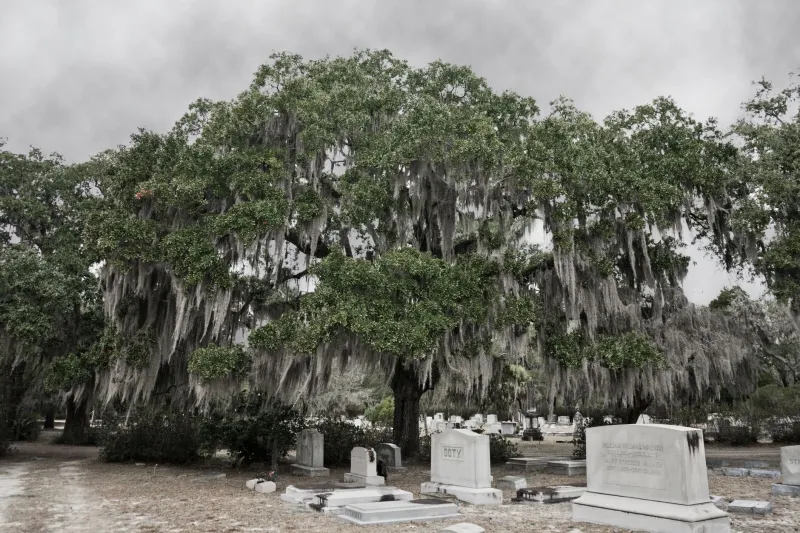
Savannah is a city that wears its history openly — in its iron-laced squares, its antebellum architecture, and perhaps most profoundly, in the quiet company of its dead. Most visitors make the pilgrimage to Bonaventure Cemetery, drawn by the moss-draped oaks and the haunting beauty immortalized in Midnight in the Garden of Good and Evil. That pilgrimage is well-earned. But limiting your exploration to Bonaventure alone is like reading only the first chapter of a novel and calling it finished.
Savannah's other historic burial grounds — Colonial Park Cemetery, Laurel Grove Cemetery, and Pinewood Cemetery — hold chapters of the city's story that are equally essential, and in many ways more challenging to reckon with. These are places where the full complexity of Georgia's history comes into focus: the triumphs of the Revolutionary era, the brutal arithmetic of racial segregation, and the enduring legacy of African American communities who built much of what visitors admire today.
For the thoughtful traveler, these sacred spaces are not simply stops on a ghost tour. They are primary sources — open-air archives where the landscape itself tells the truth.
Colonial Park Cemetery: Where the Revolution Still Rests
Established in 1750, Colonial Park Cemetery is Savannah's oldest surviving burial ground and one of the most historically significant sites in the entire state of Georgia. Located at the corner of Oglethorpe Avenue and Abercorn Street in the heart of the Historic District, it served as the city's primary public cemetery for nearly a century.
Walking through its wrought-iron gates, visitors encounter the graves of some of Georgia's most consequential early figures. Button Gwinnett, one of only three Georgians to sign the Declaration of Independence, is believed to be interred here — though the precise location of his grave remains a subject of historical debate, adding an element of mystery that suits Savannah perfectly. The cemetery also holds the remains of governors, Revolutionary War soldiers, and victims of the devastating yellow fever epidemics that swept through the city in the late 18th century.
One feature that often surprises first-time visitors: a section of the eastern wall displays epitaphs that appear to list impossible death dates — men who died at 100 years old or more, recorded in ways that strain credulity. These are not errors. During the Civil War, Union soldiers occupying Savannah reportedly moved grave markers as a form of mischief, leaving an enduring puzzle for historians and visitors alike. The city has preserved this disarray deliberately, treating it as part of the site's layered historical record.
Colonial Park is freely accessible during daylight hours and is managed as part of Savannah's park system. Its central location makes it an ideal starting point for any heritage-focused walking tour of the Historic District.
Laurel Grove Cemetery: A Divided Landscape, An Undivided History
Established in 1852, Laurel Grove Cemetery was created as Savannah's municipal burial ground — and from its very inception, it was designed along the racial lines that defined antebellum Southern society. The cemetery is formally divided into two sections: Laurel Grove North, originally reserved for white residents, and Laurel Grove South, designated for African Americans, both enslaved and free.
This geographic division, separated by a fence line that still exists today, functions as one of Savannah's most direct and sobering monuments to the era of legalized segregation. Walking the grounds of both sections in a single visit is an experience that no historical text can fully replicate. The disparity in monument scale, material, and preservation between the two sides reflects the economic and social inequities of the time with uncomfortable clarity.
Yet Laurel Grove South is far from a site of diminishment alone. It is also a place of remarkable dignity and cultural significance. The cemetery holds the graves of Andrew Bryan, one of the founders of the First African Baptist Church — the oldest African American Baptist congregation in North America — and other leaders of Savannah's free Black community. Their presence here speaks to a history of resilience and spiritual leadership that ran parallel to, and often in defiance of, the oppressive structures surrounding them.
For visitors who wish to engage seriously with Savannah's history of race and community, Laurel Grove South is an indispensable destination. The City of Savannah maintains both sections, and self-guided walking resources are available through the Savannah Area Chamber of Commerce and local heritage organizations.
Pinewood Cemetery: A Community's Living Memorial
Located in the Midtown area of Savannah, Pinewood Cemetery occupies a quieter position in the city's historical consciousness — which makes discovering it all the more meaningful. Established in the late 19th century to serve Savannah's African American community during the era of Jim Crow, Pinewood represents a chapter of self-determination: a burial ground created by and for a community that was systematically excluded from the city's other public spaces.
Unlike the grand landscaped gardens of Bonaventure or the prominent urban footprint of Colonial Park, Pinewood has a more intimate character. Its monuments range from elaborately carved Victorian-era stones to simple markers that testify to lives lived with limited material resources but no shortage of meaning. Local genealogists and historians frequently cite Pinewood as a critical resource for tracing African American family histories in the Coastal Georgia region, many of which were deliberately obscured or left unrecorded during the antebellum and Jim Crow eras.
Community preservation efforts have gained momentum in recent years, with local organizations working to document, restore, and interpret the cemetery's graves. Visitors are encouraged to approach Pinewood with the same reverence they would bring to any active memorial space — because for many Savannah families, it remains exactly that.
Planning Your Visit: Practical Guidance for Respectful Exploration
All three cemeteries welcome visitors, though each has its own hours and protocols. Colonial Park Cemetery is open daily from 8:00 a.m. to 8:00 p.m. and is easily reached on foot from most Historic District accommodations. Laurel Grove Cemetery is accessible by car or bicycle and is open during daylight hours; parking is available along the perimeter roads. Pinewood Cemetery is best visited with advance research, as interpretive signage is limited — connecting with a local heritage organization or licensed guide before your visit will significantly enrich the experience.
Photography is generally permitted at all three sites, but visitors are asked to be mindful of active gravesites and to refrain from disturbing any markers or plantings. These are not museums; they are sacred spaces that belong, first and foremost, to the families and communities whose loved ones rest within them.
Savannah's identity as the Hostess City has always been rooted in a genuine willingness to share its story — all of it, including the parts that are difficult to tell. These three cemeteries are among the most honest places in the city. Visit them, and you will understand Savannah in ways that no guided highlight tour can offer.