Makers, Visionaries, and the New Savannah: Inside the City's Thriving Creative Economy
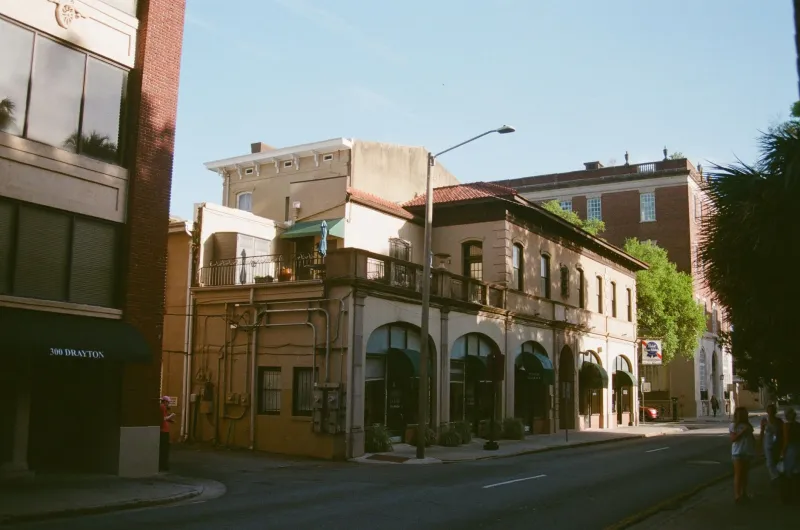
Walk the length of Broughton Street on a weekday afternoon and the evidence is everywhere: a graphic design studio occupying a restored Victorian commercial storefront, a ceramics collective operating out of a repurposed warehouse in the Thomas Square corridor, a fashion label whose founder trained at the Savannah College of Art and Design and chose to stay. Savannah has always attracted the creative temperament — its beauty is the kind that makes people want to make things. What has changed in recent years is the infrastructure supporting those impulses, and the ambition of the people acting on them.
The city is experiencing a measurable creative economy expansion, and understanding it requires moving beyond the familiar landmarks.
The SCAD Effect and What Came After
No honest account of Savannah's contemporary creative landscape can ignore the role of the Savannah College of Art and Design, which since its founding in 1978 has transformed the city's relationship with creative enterprise. SCAD's decision to restore and repurpose dozens of historic buildings as academic facilities established a precedent that private developers and small business owners would later follow. The institution also generated a reliable pipeline of trained designers, filmmakers, illustrators, and architects who, upon graduation, faced a choice: depart for Atlanta, New York, or Los Angeles, or remain and build something here.
Increasingly, a meaningful percentage of graduates are choosing to stay. The reasons are practical as well as philosophical. Commercial rents in Savannah's historic neighborhoods, while rising, remain substantially lower than in major metropolitan markets. The city's physical scale — navigable on foot or bicycle — reduces overhead and fosters the kind of accidental collaboration that larger cities charge premium prices to simulate. And there is something about Savannah's particular atmosphere, its layered history and slow insistence on beauty, that many creative people find genuinely sustaining.
Neighborhoods as Incubators
The geography of Savannah's emerging creative economy is not uniform. Different neighborhoods have developed distinct creative identities, each shaped by rent economics, proximity to anchor institutions, and the particular enthusiasms of early-mover residents.
The Victorian District and Thomas Square Streetcar Historic District have emerged as the most concentrated zones of creative enterprise. Independent galleries occupy ground-floor spaces beneath residential apartments. Small-batch food producers share commercial kitchen facilities. A growing number of maker spaces — collaborative workshops equipped with woodworking tools, laser cutters, textile equipment, and ceramics kilns — offer hourly and monthly memberships to independent creators who cannot afford dedicated studio space.
The Starland District, anchored by a beloved community market that has operated for years, exemplifies the organic development model. What began as a cluster of independent coffee shops, vintage dealers, and small galleries has gradually attracted more sophisticated creative enterprises without entirely displacing the neighborhood's eclectic, accessible character. Residents and visitors alike describe it as feeling like a neighborhood that has not yet decided what it is — a quality that, paradoxically, makes it one of the most interesting places in the city.
The Eastside and the emerging corridor along Waters Avenue represent the next frontier, with lower rents attracting artists and entrepreneurs who are willing to trade proximity to the tourist core for space, autonomy, and the particular energy of a neighborhood in early transition.
Preservation as Creative Practice
What distinguishes Savannah's creative economy from comparable scenes in other American cities is the degree to which historic preservation functions not as a constraint but as a creative discipline. Many of the city's most interesting new enterprises are located in buildings that required substantial restoration work before they could be occupied, and the founders of those enterprises often describe the process of working within historic structures as formative to their creative identities.
This alignment between preservation values and creative enterprise is not accidental. Savannah's nationally recognized historic district designation, its active network of preservation advocacy organizations, and the institutional influence of SCAD have collectively cultivated a civic culture in which the quality of the built environment is understood as economically and aesthetically consequential. Young entrepreneurs arriving in Savannah absorb this ethic quickly. The buildings they work in teach them something about patience, craft, and the relationship between structure and purpose.
Galleries, Markets, and Cultural Initiatives
The infrastructure supporting Savannah's creative community extends well beyond individual studios and storefronts. A constellation of independent galleries, rotating pop-up markets, and community cultural initiatives has developed to connect makers with audiences and with one another.
Several gallery spaces in the downtown historic district operate on hybrid models — part exhibition space, part retail shop, part event venue — that allow them to sustain programming that purely commercial or purely nonprofit models could not support independently. Artist-run spaces, in particular, have proliferated, offering emerging and mid-career artists exhibition opportunities outside the traditional gallery system.
Annual events such as the Savannah Art Walk and various neighborhood market series serve as important connective tissue, drawing residents and visitors into direct contact with local makers and providing creators with revenue-generating opportunities that supplement studio sales and commissions.
What This Means for Visitors
For travelers visiting Savannah, the city's creative economy offers a dimension of experience that conventional tourism itineraries rarely capture. Engaging with local galleries, attending studio open houses, shopping at maker markets, and simply wandering the Thomas Square or Starland corridors on a weekend afternoon provides access to a living, working creative community rather than a curated heritage experience.
The new Savannah and the historic Savannah are not in competition. They are, at their best, in conversation — and that conversation is one of the most compelling things the city currently has to offer.