Small Metal, Large Lives: A Walker's Guide to Savannah's Historic Markers
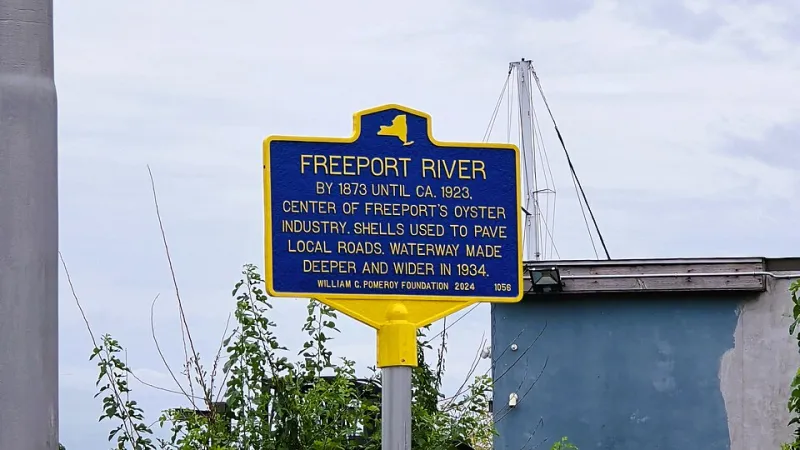
Photo: XanderAi, CC BY-SA 4.0, via Wikimedia Commons
Savannah is a city of layers, and some of its most revealing layers are small enough to walk past. Historic markers stand at square edges, beside church doors, near railway depots, and along ordinary sidewalks. They are easy to dismiss as civic decoration. They are better understood as footnotes to the city's self-portrait, placed by people who made choices about what to remember and how to say it.
A marker walk is not a substitute for a museum. It is something different: a way to read the city at street level, at your own pace, with the built environment as the exhibit. The best approach is curious rather than completist. You will not read every plaque in Savannah in a weekend. You can, however, learn to read the ones you pass.
How to Read a Marker
Begin with the top line. It usually names the person, place, event, or institution being commemorated. Then look for the date. A marker installed in the 1950s is speaking from the 1950s, even when it describes the 1770s. Its language, emphasis, and omissions carry the assumptions of its own era.
Next, read the sponsor line. Historical markers are not spontaneous outpourings from the past. They are commissioned, researched, funded, and approved. A marker placed by a state historical commission, a local society, a church, a family, or a preservation group tells you something about who wanted the story told. That does not make the text false. It makes it partial, which is true of every historical account.
Finally, read the text twice. The first reading gives you the facts. The second reading gives you the silences. Who is named? Who is described only by a category? Whose labor built the structure being celebrated? Whose displacement made the site possible? These questions turn a metal sign into a conversation.
A Walking Route Through Overlooked Stories
A manageable route begins in Reynolds Square, where markers and monuments introduce the colonial and Methodist histories that many visitors already expect. From there, walk east toward Battlefield Memorial Park, where the 1779 Siege of Savannah is commemorated. Read carefully here. The battle was not only a British and American affair; Haitian soldiers fought alongside French and American forces, and their presence is part of the larger Atlantic story that Savannah's markers increasingly acknowledge.
Continue toward Franklin Square and the First African Baptist Church. The church's history reaches back to the eighteenth century and to a congregation formed under the constraints of slavery. A marker here is not simply a church history. It is a record of faith, self-organization, and persistence in a city that did not make Black freedom easy.
From there, make your way to the Beach Institute on East Harris Street. The institute began as a school for African American children after the Civil War and later became a cultural center. The marker and the building together show how education was one of the most contested arenas of Reconstruction and its aftermath. This is the kind of stop that rewards a slower walk: read the sign, look at the block, and consider what it meant to learn and teach here.
If time allows, extend the walk toward Forsyth Park or the Green-Meldrim House. At the Green-Meldrim House, the marker will tell you about General Sherman's stay in 1864. Read it alongside the city's Civil War and emancipation history, and the house becomes more than a lovely Gothic Revival building. It becomes a place where military strategy, domestic space, and the end of slavery briefly converge.
The Markers That Ask More of You
Some markers are comfortable. They celebrate founders, congregations, and famous residents. Others ask more. Markers about enslaved people, free Black artisans, women's organizations, Native American displacement, maritime labor, and Reconstruction can be brief to the point of frustration. That brevity is itself information. It shows where the public record has been thin, where research is still catching up, and where a traveler's curiosity can do useful work.
This is not an argument that every marker must be a monument to tragedy. Savannah's history includes joy, ingenuity, worship, commerce, and ordinary neighborliness. The point is to resist the version of the city that is only charming. A marker walk is most valuable when it holds charm and complication together.
Practical Notes for the Plaque Walker
Wear comfortable shoes and carry water. The route above is roughly two to three miles, depending on detours, and Savannah's streets are not always smooth. Photograph marker text as you go; it is easier than trying to remember dates later. The Georgia Historical Society maintains an online marker index, and local libraries and archives can help you go deeper.
Do not block sidewalks while reading. Step to the side, especially on narrow streets. Be respectful at churches and private buildings. A marker may invite you to look, but it does not invite you inside.
Most of all, let the markers slow you down. A plaque walk is a treasure map without a prize at the end, unless the prize is a better understanding of how Savannah has chosen to tell its own story. The small metal signs are not the conclusion. They are the opening sentence.